
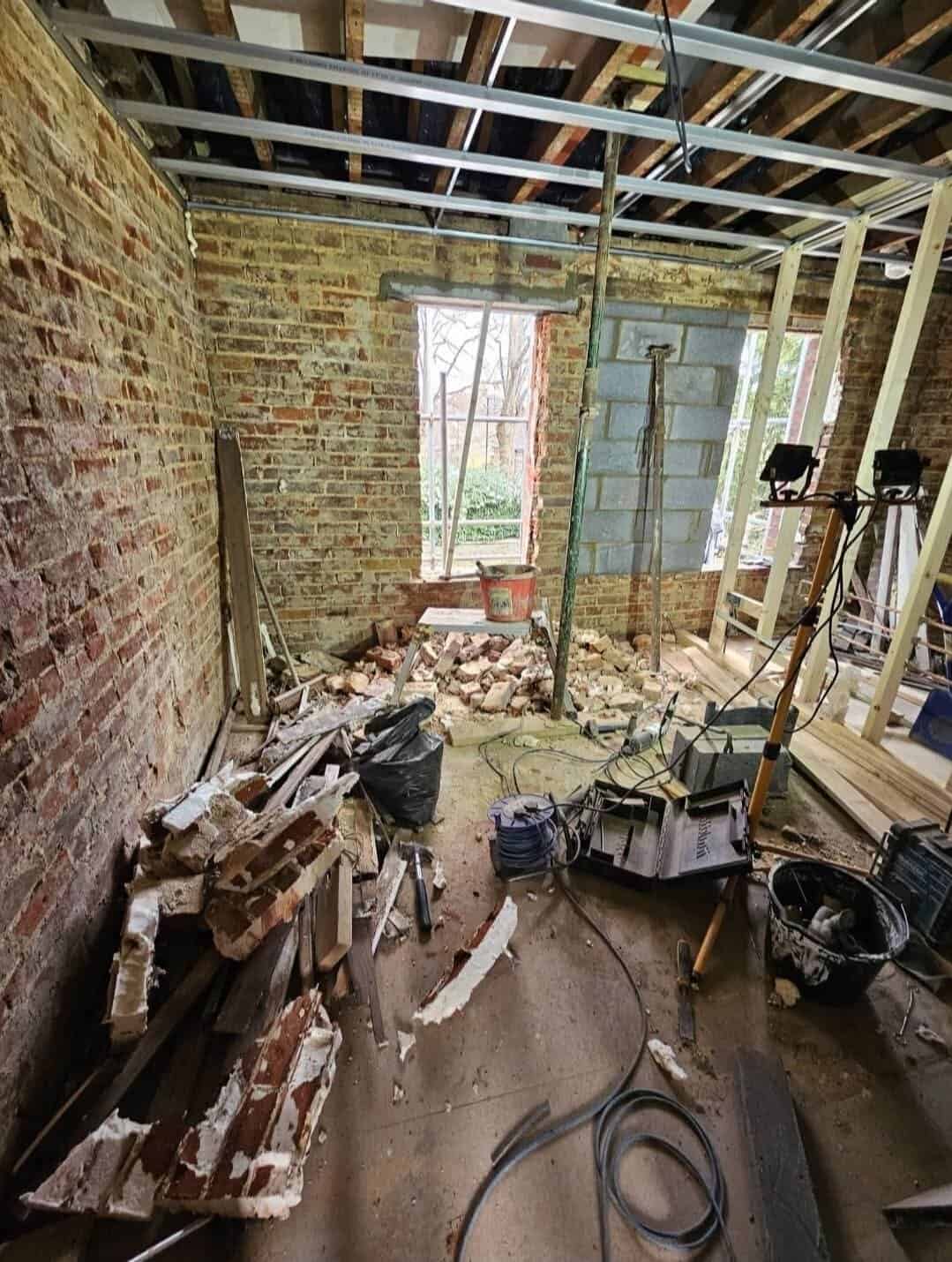
At Blydan Projects, we often speak with homeowners who are worried about cracks in their walls, doors that no longer close properly, or floors that feel uneven. In many cases, these issues are harmless and linked to natural settlement or seasonal changes. However, there are times when subsidence, cracking and structural movement indicate a much more serious underlying problem. Knowing the difference can protect both your home and your peace of mind.
Understanding the Difference Between Minor Movement and Structural Issues
All buildings move to some degree. Changes in temperature, moisture levels in the ground and the natural ageing of materials can all cause small cracks to appear over time. Hairline cracks around door frames or ceilings are often cosmetic and can usually be resolved with simple repairs. However, when cracks become wider, reappear after being filled, or appear suddenly, they may signal something more serious.
In our experience, the biggest concern is not the crack itself, but what caused it. Movement can be the result of foundation issues, soil shrinkage, leaking drains or poor structural support. At Blydan Projects, we regularly assess properties where homeowners are unsure whether to worry or not. This is where professional inspection is vital. As specialists carrying out structural repairs in Southampton, we understand how local ground conditions and building styles can influence movement. Identifying the cause early can prevent costly damage later.
Common Warning Signs That Should Not Be Ignored
Some signs of structural movement are subtle, while others are more obvious. Cracks that run diagonally across walls, particularly from window or door corners, are often a cause for concern. Large cracks that can fit a coin or finger are another warning sign. You may also notice doors and windows sticking, gaps forming between walls and ceilings, or floors sloping where they were once level.
Externally, brickwork cracks, bulging walls or separation around extensions can indicate foundation movement. These symptoms often develop gradually, making them easy to overlook until the damage becomes more severe. We frequently meet homeowners who assumed the issue was minor, only to discover later that movement had been ongoing for years.
At Blydan Projects, we encourage homeowners to trust their instincts. If something feels different in your home or damage appears to be worsening, it is always worth seeking professional advice. Early assessment often means simpler, more affordable solutions.
What Causes Subsidence and Structural Movement?
Subsidence occurs when the ground beneath a property moves or weakens, causing the foundations to sink. In the UK, one of the most common causes is clay soil shrinkage during prolonged dry periods. Trees and large shrubs can also draw moisture from the soil, increasing the risk of movement, especially when planted close to buildings.
Leaking drains are another frequent culprit. Over time, escaping water can wash away soil beneath foundations, leaving them unsupported. Poorly constructed foundations, especially in older properties, may also struggle to cope with modern loads or nearby development work.
Structural movement can also occur higher up in the building. Inadequate lintels, overloaded walls or previous alterations carried out without proper support can all lead to cracking and instability. Understanding the cause is critical, as treating symptoms without addressing the root problem will not provide a lasting solution. This is why professional investigation is always the first step before any repair work begins.
How Professional Assessment Makes All the Difference
When we inspect a property, our focus is on understanding the full picture. We look at crack patterns, measure movement, assess foundation conditions and consider the history of the building. In some cases, movement may have already stabilised, meaning repairs can be carried out safely without further intervention. In others, active movement may still be ongoing and require structural solutions before cosmetic repairs can be considered.
At Blydan Projects, we often work alongside structural engineers to ensure that every recommendation is based on solid evidence. This approach avoids unnecessary work while ensuring safety is never compromised. For homeowners, this clarity is invaluable. It removes uncertainty and allows informed decisions to be made about the future of the property.
A professional assessment also protects property value. Mortgage lenders and insurers often require proof that movement has been properly addressed. Having documented repairs carried out by experienced professionals can make a significant difference when selling or refinancing a home.
When Structural Repairs Become Necessary
In cases where movement has caused structural weakness, repairs may need to go beyond simple patching or redecorating. Cracked walls may require reinforcement, foundations may need strengthening, and load-bearing elements must be properly supported. This is where experience in structural building work becomes essential.
At Blydan Projects, we carry out a wide range of structural repairs, including wall reinforcement, lintel replacement and foundation stabilisation. In more complex cases, steel installations are required to redistribute loads safely and prevent further movement. Steel beams and supports can be discreetly integrated into walls, floors or ceilings, restoring strength without compromising the appearance of the home.
While the idea of structural work can feel daunting, modern techniques allow these repairs to be carried out efficiently and with minimal disruption. The key is ensuring the work is designed and installed correctly from the outset, providing long-term stability rather than a temporary fix.
The Risks of Delaying Action
One of the biggest mistakes homeowners make is delaying action in the hope that cracks will stop getting worse. Unfortunately, structural issues rarely resolve themselves. Movement often continues gradually, causing damage to spread and repair costs to rise.
Delaying repairs can also lead to secondary problems, such as water ingress, heat loss and further material degradation. Cracks allow moisture into walls, which can weaken masonry and lead to internal damp issues. Over time, what started as a single crack can develop into widespread structural deterioration.
From our experience, early intervention is almost always the most cost-effective approach. Addressing the problem at its source prevents further damage and protects the overall integrity of the building. At Blydan Projects, we focus on providing honest advice, even if that means confirming that no immediate action is required. Our priority is always the long-term health of your home.
Living in a Property While Repairs Are Carried Out
A common concern for homeowners is whether they can remain in their property during structural repairs. In many cases, the answer is yes. Much depends on the extent of the work required and the areas affected. Structural reinforcement and steel installations can often be completed with minimal disruption, especially when planned carefully.
We always aim to keep our sites clean, safe and well-organised, communicating clearly with homeowners throughout the process. Where temporary disruption is unavoidable, we explain this in advance and work to minimise inconvenience wherever possible. Clear communication and careful planning make a significant difference to the overall experience.
Our approach ensures that homeowners feel informed and supported from the first inspection through to final completion. Structural repairs may feel intimidating, but with the right team in place, they can be managed smoothly and professionally.
Protecting Your Home for the Future
Addressing subsidence, cracking and movement is not just about fixing visible damage. It is about protecting your home for years to come. Proper structural repairs restore stability, improve safety and preserve property value. They also provide peace of mind, knowing that the building is secure and well-supported.
At Blydan Projects, we take pride in delivering reliable, high-quality solutions tailored to each individual property. Our experience across Southampton and the surrounding areas gives us a deep understanding of local building types and ground conditions. This allows us to offer practical advice and effective repairs that stand the test of time.
If you have concerns about cracks, movement or subsidence in your home, seeking professional advice early is always the best step. With the right assessment and the right repairs, serious problems can be resolved safely and effectively.